prologue
Death Introduces the Story
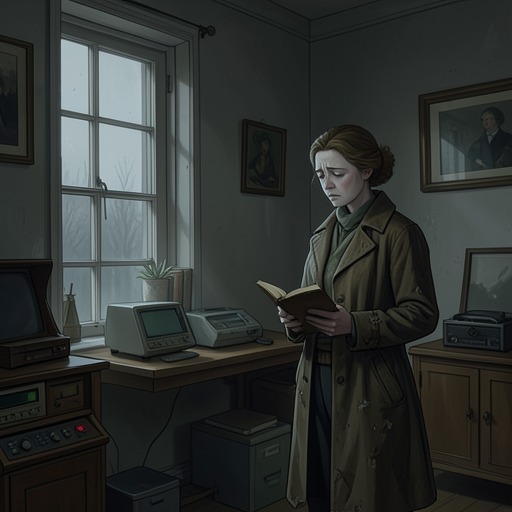
Death presents the world through colors before turning to the humans who inhabit it. He announces that everyone will die and frames the narrative as one of the stories he carries to distract himself from the suffering left behind by human deaths.
His subject is [Liesel Meminger](entity:character-recall-character-liesel-meminger-f368eb23d5aa), a perpetual survivor and thief of books. Death has seen her three times, in white beside a railway line, in black beneath a dying plane, and in red among the rubble of a destroyed town.
January 1939
Werner Dies on the Train
[Liesel Meminger](entity:character-recall-character-liesel-meminger-f368eb23d5aa) travels by train with her mother and younger brother Werner toward [Munich](entity:location-recall-location-munich-a2858688fbfd), where the children are to be placed with foster parents. During the journey Werner dies after a violent coughing fit, while Liesel’s mother remains asleep and unaware of the exact moment of his death.
Liesel wakes from a dream of [Adolf Hitler](entity:character-recall-character-adolf-hitler-e6e3f1777476) and sees her brother lying dead. Death takes Werner’s soul, but lingers because the girl’s stunned grief captures his attention.
January 1939
The Grave Digger’s Handbook Theft
The train stops in a snowy, nameless town, where Werner is buried two days later. During the burial, an apprentice grave digger accidentally drops a black book into the snow, and Liesel notices it after her mother drags her away from the grave.
She secretly takes the book and carries it to the foster home, though she cannot yet read its title or contents. The theft becomes the first act in her lifelong relationship with words.
January 1939
Arrival on Himmel Street
Liesel and her mother travel to [Molching](entity:location-recall-location-molching-dee45df94118), where the girl is delivered to [33 Himmel Street](entity:location-recall-location-33-himmel-street-2877a51599a6) and placed with [Hans Hubermann](entity:character-recall-character-hans-hubermann-c754fffec496) and [Rosa Hubermann](entity:character-recall-character-rosa-hubermann-4299bc6ccaf3). Liesel refuses to leave the car, clings to the gate, and resists the new household because foster care feels like another abandonment.
Eventually Hans leads her inside with quiet patience, while Rosa greets her with profanity and force. Liesel’s new home is not heaven, despite the name [Himmel Street](entity:location-recall-location-himmel-street-79c2f98a23ef), but it becomes the setting in which she will build a second family.
early 1939
Hans Wins Liesel’s Trust
Liesel’s first nights with the Hubermanns are dominated by nightmares of Werner’s death. Hans enters whenever she screams, sits beside her, and gradually comforts her without demanding anything in return.
His gentleness establishes the first durable bond in her new life. He becomes Papa not through authority but through presence, proving that love can mean simply refusing to leave.
February 1939
Liesel Joins the BDM
On her tenth birthday Liesel receives a damaged doll and is enrolled in the [Bund Deutscher Mädel](entity:organization-recall-organization-e7a3b2a67ae8), the girls’ division of [Hitler Youth](entity:organization-recall-organization-df2a93a0d7dc). She learns marching, bandaging, sewing, and the required Nazi salute and greeting.
The ritual makes her part of the public world of [Nazi Germany](entity:state-recall-state-nazi-germany-49f8fc82d860), even as her private life remains shaped by grief, poverty, and the Hubermanns’ unstable relationship to the regime.
spring 1939
Rudy Becomes Her Friend
Liesel meets [Rudy Steiner](entity:character-recall-character-rudy-steiner-306f9882d229) while playing soccer on [Himmel Street](entity:location-recall-location-himmel-street-79c2f98a23ef). After she unexpectedly saves a penalty and Rudy throws a mud-filled snowball into her face, the children begin a friendship built on insults, competition, hunger, and loyalty.
Rudy is fascinated by Jesse Owens and already regards Liesel as someone special. Their bond becomes one of the novel’s central sources of energy and impending loss.
1936 recalled during 1939
Rudy’s Jesse Owens Incident
Rudy’s family remembers the earlier incident in which he covered himself in charcoal and ran at [Hubert Oval](entity:location-recall-location-hubert-oval-860f8a436513) pretending to be Jesse Owens. His father finds him and explains that German children are not supposed to imitate Black people or Jews.
Rudy cannot understand why athletic greatness should be forbidden by race. The incident exposes the absurdity of Nazi racial ideology and foreshadows Rudy’s lifelong resistance to the identities imposed on him.
late May 1939
Hans Begins Midnight Lessons
After Liesel wets the bed during a nightmare, [The Grave Digger’s Handbook](entity:object-recall-object-the-grave-digger-s-han-594982d219b6) falls from beneath her sheets. Hans discovers it, learns that she wants to read it, and begins teaching her in the middle of the night.
Because neither Hans nor Liesel is a confident reader, he starts with the alphabet on sandpaper, using drawings, jokes, and patience. These lessons transform reading from a source of humiliation into an intimate language between father and daughter.
September 1939
The War Begins
Germany invades Poland, and the Second World War begins. Newspapers, radios, rationing, and public speeches bring the conflict into [Molching](entity:location-recall-location-molching-dee45df94118), while Hitler’s voice promises victory and endurance.
Hans reads the headline that Poland has been taken and recognizes the grim reality beneath the patriotic slogans. The war enlarges every danger already present in the Hubermanns’ household.
November 1939
Liesel Beats Schmeikl at School
During a reading test Liesel is humiliated when she cannot read the assigned passage. [Ludwig Schmeikl](entity:character-recall-character-ludwig-schmeikl-a368173f4519) mocks her, and after enduring repeated taunts she attacks him violently, then strikes [Tommy Müller](entity:character-recall-character-tommy-m-ller-a3b4d4acec6e) as well in the confusion.
The punishment is the worst corridor beating [Sister Maria](entity:character-recall-character-sister-maria-f4677693a863) can deliver, but Liesel emerges with a new reputation. Her words are still incomplete, yet her fists have announced that she will not accept being treated as stupid.
April 20 1940
The Shoulder Shrug Is Stolen
On Hitler’s birthday, [Molching](entity:location-recall-location-molching-dee45df94118) prepares for a Nazi celebration that will culminate in a book burning. Liesel, angered by the persecution of her mother and the disappearance of her father, watches the bonfire and associates its denunciations of communists and Jews with her own family’s suffering.
When cleanup begins, she reaches into the surviving ashes and steals [The Shoulder Shrug](entity:object-recall-object-the-shoulder-shrug-d7cdabdc095b). The act joins her private rage to the public destruction of books and initiates the next phase of her thievery.
spring 1940
Hans Trades for Mein Kampf
Hans understands that Liesel’s theft can be turned into protection. He buys a used copy of [Mein Kampf](entity:object-recall-object-mein-kampf-d18485512434) from the [Nazi Party](entity:organization-recall-organization-bddabb00303b) office with cigarettes and money, then hides the book’s real purpose beneath its public authority.
The purchase gives him a disguise for a future act of resistance. It also begins the chain that will lead [Max Vandenburg](entity:character-recall-character-max-vandenburg-177af268e01a) from hiding in [Stuttgart](entity:location-recall-location-stuttgart-3438e738c404) to the Hubermanns’ door.
mid 1940
Liesel Enters the Mayor’s Library
Liesel delivers washing to [8 Grande Strasse](entity:location-recall-location-8-grande-strasse-a9667c6ffe55) and is silently invited inside by [Ilsa Hermann](entity:character-recall-character-ilsa-hermann-adaeb9ddf5d4). The mayor’s wife reveals a room lined with books, a private world of language that overwhelms Liesel with wonder.
Ilsa permits her to read there, and the library becomes the place where Liesel’s growing literacy acquires emotional force. It is also the beginning of a relationship in which books, grief, and unspoken kindness continually replace ordinary conversation.
summer 1940
Liesel and Rudy Steal Apples
Hunger drives Liesel and Rudy into the circle of older fruit thieves led by [Arthur Berg](entity:character-recall-character-arthur-berg-e3fd696bfc07). They learn to cross fences, gather apples, and share the spoils, gradually turning theft into both sustenance and friendship.
The group’s methods are rough but still governed by a fragile morality. Arthur protects weaker thieves and eventually sends Rudy and Liesel to return a stolen basket, distinguishing their small crimes from the brutality of the world around them.
1938 to late 1940
Max Hides in Stuttgart
Maximilian von Bismarck fled his family during the Night of Broken Glass and hid in a cellar for nearly two years, supported by [Walter Kugler](entity:character-recall-character-walter-kugler-ef5872ad5fcf). Walter eventually investigated [Hans Hubermann](entity:character-recall-character-hans-hubermann-c754fffec496), confirming he was still trustworthy, lived in poverty, and was bound by the promise of the Eric
November 1940
Max Arrives at 33 Himmel Street
Max reaches [33 Himmel Street](entity:location-recall-location-33-himmel-street-2877a51599a6) carrying [Mein Kampf](entity:object-recall-object-mein-kampf-d18485512434) and a suitcase. He asks Hans whether he still plays the accordion, using the question to ask whether the old promise still holds.
Hans admits him despite the danger, while Rosa responds with practical severity rather than sentiment. Liesel discovers the stranger in the kitchen and becomes part of the secret that now governs the entire household.
November 1940
Hans Lectures Liesel
Hans explains to Liesel that Max is the son of [Erik Vandenburg](entity:character-recall-character-erik-vandenburg-d7ab4f71a816) and that revealing him would destroy the family. He makes her promise silence and threatens to burn her books if she speaks.
The lesson is harsh because survival requires absolute secrecy. Liesel accepts the burden, learning that words can save people but can also expose them to annihilation.
late 1940
Max Moves into the Basement
Max initially sleeps in Liesel’s room but moves beneath the basement stairs when he recognizes the danger of sharing visible space. Hans and Rosa disguise his shelter among drop sheets, paint cans, and darkness.
The basement becomes both prison and refuge. Its cold threatens Max’s health, but it also becomes the private world where he and Liesel exchange newspapers, reading, dreams, and the fragile beginnings of friendship.
winter 1940 to 1941
Max and Liesel Share Nightmares
Max and Liesel discover that both are haunted by recurring visions: Liesel sees Werner on the train, while Max sees himself abandoning his family. They begin speaking about their nightmares beside the dying fire.
The exchange does not cure their trauma, but it makes each person less alone. Their friendship grows from shared fear and from the recognition that survival can be as painful as death.
February 1941
Max Creates The Standover Man
For Liesel’s birthday, Max paints over pages of [Mein Kampf](entity:object-recall-object-mein-kampf-d18485512434) and creates [The Standover Man](entity:object-recall-object-the-standover-man-00ced433177a). The booklet transforms Nazi propaganda into a personal story about fear, friendship, and the strange man who once stood over him.
Liesel reads the gift and later sleeps beside Max’s hidden shelter with her hand resting on his shoulder. The work proves that words can be reclaimed from tyranny and remade into an intimate act of love.
spring 1941
Max Imagines Fighting Hitler
Max exercises in the basement and imagines a boxing match against [Adolf Hitler](entity:character-recall-character-adolf-hitler-e6e3f1777476). In the fantasy Hitler uses words to summon a nation against him, while Max eventually rises and knocks at the dictator’s mustache.
The imagined fight gives Max a private form of resistance when real resistance would endanger the Hubermanns. His body, weakened by hiding, becomes strong again through an act of imagination.
June 1941
The Word Shaker Is Written
Max and the Hubermanns paint over the remaining pages of [Mein Kampf](entity:object-recall-object-mein-kampf-d18485512434). From this work emerges [The Word Shaker](entity:expression-recall-expression-the-word-shaker-b7daa413e95d), a fable about Hitler’s forests of words, a girl who climbs higher than anyone, and a friendship that grows into a tree the Führer cannot destroy.
The story gives symbolic form to Liesel’s relation to language. It argues that Hitler’s power depends on words, but that words can also resist him when they are used with courage and love.
summer 1941
Rudy Faces Viktor Chemmel
After [Arthur Berg](entity:character-recall-character-arthur-berg-e3fd696bfc07) leaves [Molching](entity:location-recall-location-molching-dee45df94118), [Viktor Chemmel](entity:character-recall-character-viktor-chemmel-5b4d2cefc485) takes control of the fruit thieves. His leadership is selfish and coercive, and he attacks Rudy when the boy protests receiving too little food.
Rudy and Liesel abandon the gang, carrying with them a clearer sense of the difference between criminal companionship and domination. Their loyalty to each other becomes more important than the food the group can provide.
October 1941
Liesel Steals The Whistler
Rudy and Liesel return to the mayor’s house, hoping to steal food. Liesel enters through the open library window, but the books draw her away from the kitchen and she takes [The Whistler](entity:object-recall-object-the-whistler-108732bc5b5e) instead.
Rudy forgets her shoes inside and returns for them, risking capture to repair the damage. The theft gives Liesel the title by which she is first openly known: the book thief.
late 1941
Rudy Resists Hitler Youth
Rudy is humiliated and injured under [Franz Deutscher](entity:character-recall-character-franz-deutscher-6c2044e48bc9)’s leadership in [Hitler Youth](entity:organization-recall-organization-df2a93a0d7dc). He is beaten, forced to answer questions about Hitler’s birthday, and publicly given a rough haircut after provoking Deutscher on [Munich Street](entity:location-recall-location-munich-street-1b773e16290f).
Rudy eventually stops attending and joins a different division with [Tommy Müller](entity:character-recall-character-tommy-m-ller-a3b4d4acec6e). His defiance is reckless, but it reveals his refusal to become the obedient Aryan athlete the regime wants to manufacture.
December 1941
The Whistler Falls into the River
[Viktor Chemmel](entity:character-recall-character-viktor-chemmel-5b4d2cefc485) steals [The Whistler](entity:object-recall-object-the-whistler-108732bc5b5e) from Liesel and throws it into the [Amper River](entity:location-recall-location-amper-river-cc49f008139d). Rudy dives into the freezing water and catches the book, sacrificing comfort and safety for Liesel’s possession.
He uses the rescue as one more opportunity to ask for a kiss, though he is too afraid of rejection to press the matter. His act is both comic and profoundly selfless, foreshadowing the love Liesel will understand only after his death.
Christmas Eve 1941
The Snowman in the Basement
Liesel carries snow into the basement and builds a small snowman with Max, Hans, and Rosa. For a brief time the family forgets the war and plays together in the cold.
The snowman becomes a symbol of impossible warmth, but Max’s prolonged exposure worsens his condition. He begins to lose weight, shiver constantly, and collapse beneath the strain of hiding.
February 1942
Max Falls Ill
Max collapses near the fire and is moved into Liesel’s bed. His condition becomes so grave that Liesel fears he will die, leaving the Hubermanns with the terrifying problem of disposing of a Jewish corpse.
She reads [The Whistler](entity:object-recall-object-the-whistler-108732bc5b5e) aloud to him and gathers thirteen small presents, including a crushed soccer ball, newspapers, a feather, a cloud, and a toy soldier. Her care gives Max a reason to return to consciousness.
March 1942
Max Wakes Again
After more than a week of near-catatonic sleep, Max gradually wakes. Rosa feeds him soup, Liesel reads to him, and the family reconstructs ordinary life around his fragile recovery.
Max tells Liesel not to apologize for imagining his death, because a dead Jew would be as dangerous as a living one. His return to consciousness restores hope to the household, though the danger of discovery remains unchanged.
June 1942
The Party Inspects the Basement
A [Nazi Party](entity:organization-recall-organization-bddabb00303b) inspection unit arrives to assess basements for air-raid shelters. Liesel injures herself during soccer and uses the injury to get Hans home before the inspectors reach [33 Himmel Street](entity:location-recall-location-33-himmel-street-2877a51599a6).
Hans, Rosa, Liesel, and Max decide to behave as though nothing is wrong. The basement is judged too shallow, and the family survives the inspection through composure, luck, and a refusal to make any suspicious movement.
September 1942
Liesel Reads During the Raid
During a real air raid, Liesel reads [The Whistler](entity:object-recall-object-the-whistler-108732bc5b5e) aloud in the Fiedlers’ basement shelter. Her voice gradually quiets the frightened room, soothing children and giving adults a temporary escape from the bombs.
The event demonstrates the constructive power of words. Liesel’s reading becomes a form of communal courage, while Max, hidden at home, imagines her as a word shaker handing stories to people trapped beneath the war.
October 1942
Frau Holtzapfel Offers Coffee
[Frau Holtzapfel](entity:character-recall-character-frau-holtzapfel-9738c7b9cf1e) asks Liesel to read to her twice a week in exchange for coffee. The offer begins as a practical bargain but becomes a fragile relationship between a grieving mother and a girl who can give her temporary relief through books.
Liesel reads [The Whistler](entity:object-recall-object-the-whistler-108732bc5b5e) and later [The Dream Carrier](entity:object-recall-object-the-dream-carrier-a6a74c3df300) as the war closes around [Molching](entity:location-recall-location-molching-dee45df94118). Words cross the boundary between neighboring households that have spent years fighting.
October 1942
Hans Gives Bread to a Jew
A column of starving Jewish prisoners is marched through [Munich Street](entity:location-recall-location-munich-street-1b773e16290f) on the way to Dachau. One elderly prisoner repeatedly collapses, and Hans steps into the road to give him bread.
A soldier whips the prisoner and then Hans, while the crowd watches. Hans’s kindness becomes a public act of resistance and a devastating tactical error, because he knows the authorities may now punish him and search his household.
the night after Hans’s bread-giving, October 1942
Max Leaves Himmel Street
Fearing that his presence will bring the Gestapo to [33 Himmel Street](entity:location-recall-location-33-himmel-street-2877a51599a6), Max leaves the Hubermanns. He carries food and warm clothing, kisses Liesel’s forehead, and promises that he has left something for her to receive when she is ready.
His departure protects the household temporarily but devastates Liesel and Hans. The family is restored to external normality only by surrendering the person who had become its hidden center.
November 1942
Hans Is Sent to the LSE
Hans receives approval to join the [Nazi Party](entity:organization-recall-organization-bddabb00303b) and is immediately drafted into the [German Army](entity:organization-recall-organization-a0e1dca0aed1). The punishment for his public act of kindness is disguised as official recognition and service.
He is sent first to [Stuttgart](entity:location-recall-location-stuttgart-3438e738c404) and then to [Essen](entity:location-recall-location-essen-de5790305476) with the Air Raid Special Unit, where he will rescue survivors, extinguish fires, and collect bodies. His absence deepens Liesel’s fear that the war will take everyone she loves.
December 1942
Rudy Gives Bread to Prisoners
Rudy and Liesel distribute pieces of stale bread to Jews being marched toward Dachau. They hide among [Christmas](entity:time-recall-time-christmas-a573265d0167) trees, but soldiers discover the bread and chase them.
Rudy’s generosity marks a moral transformation: the former fruit thief becomes a bread giver. The act links him to Hans and shows how compassion can pass from one person to another even under coercion.
January 1943
Michael Returns from Stalingrad
[Michael Holtzapfel](entity:character-recall-character-michael-holtzapfel-ae1d29f4da69) returns from [Stalingrad](entity:location-recall-location-stalingrad-1719b42dce49) missing fingers and carrying the news that his brother Robert died in a military hospital. He tells Rosa that the family’s other son, Hans Junior, may still be alive.
Michael’s return reveals the physical and psychological cost of the [Battle of Stalingrad](entity:time-recall-time-battle-of-stalingrad-a6a8634d4d59). Liesel reads to [Frau Holtzapfel](entity:character-recall-character-frau-holtzapfel-9738c7b9cf1e) while grief fills the kitchen, and Death recalls Robert’s final days among snow, blood, and severed legs.
early 1943
Hans Survives the Truck Accident
During an LSE journey near [Essen](entity:location-recall-location-essen-de5790305476), [Reinhold Zucker](entity:character-recall-character-reinhold-zucker-54ab3808b885) forces Hans to exchange seats. The truck crashes, killing Zucker and breaking Hans’s leg while leaving him unfit for the most dangerous field work.
The accident saves Hans from the front-line version of his punishment. [Boris Schipper](entity:character-recall-character-boris-schipper-b876f67436b6) arranges for him to return to [Munich](entity:location-recall-location-munich-a2858688fbfd) for office work, allowing him to come home before the final bombing.
April 1943
Hans Returns Home
Hans returns to [33 Himmel Street](entity:location-recall-location-33-himmel-street-2877a51599a6) with a plastered leg. Liesel embraces him in the kitchen, and that night he tells the family about the LSE, destroyed streets, lost children, and the dead body collectors.
He resumes playing the accordion for Liesel, fulfilling his promise. For ninety-seven days the household experiences a fragile restoration of its earlier happiness.
July 24 1943
Michael Holtzapfel Commits Suicide
[Michael Holtzapfel](entity:character-recall-character-michael-holtzapfel-ae1d29f4da69) hangs himself in a laundry after weeks of sleepless guilt over surviving the war and Robert’s death. His mother finds him, and Hans must deliver the news that she has lost both sons in six months.
The death shows how survival can become another form of punishment. Liesel continues reading to [Frau Holtzapfel](entity:character-recall-character-frau-holtzapfel-9738c7b9cf1e) through the funeral, using [The Dream Carrier](entity:object-recall-object-the-dream-carrier-a6a74c3df300) as a small act of companionship against unbearable grief.
August 1943
Max Marches Through Molching
A column of Jewish prisoners is marched through [Molching](entity:location-recall-location-molching-dee45df94118) toward Dachau. Liesel searches the prisoners for Max and recognizes him by the way he searches the crowd for her.
She enters the procession and walks beside him, reciting [The Word Shaker](entity:expression-recall-expression-the-word-shaker-b7daa413e95d) and their shared history. A soldier drags her away and whips both her and Max, but their reunion confirms that the friendship forged in the basement has survived separation and persecution.
mid-August to October 1943
Liesel Writes Her Manuscript
After the reunion with Max, Liesel returns to [Ilsa Hermann](entity:character-recall-character-ilsa-hermann-adaeb9ddf5d4)’s library, destroys pages in anger, and then receives a black notebook with an invitation to write rather than punish herself. She begins composing The Book Thief in the basement.
Her manuscript recounts Werner’s death, Hans and Rosa, Max, Rudy, the books, and the power of words. Writing becomes both confession and survival, giving shape to experiences that otherwise remain unbearable.
October 7 1943
Himmel Street Is Bombed
The Allies bomb [Himmel Street](entity:location-recall-location-himmel-street-79c2f98a23ef) while its residents sleep. The Hubermanns, Rudy’s family, [Frau Holtzapfel](entity:character-recall-character-frau-holtzapfel-9738c7b9cf1e), [Tommy Müller](entity:character-recall-character-tommy-m-ller-a3b4d4acec6e), and the other neighbors are killed almost instantly.
Liesel survives because she is in the basement reading over her manuscript. Rescuers dig her out while she still grips the book, the words having preserved her life even as they cannot save the people she loves.
October 7 1943
Liesel Kisses Rudy’s Corpse
Among the rubble Liesel finds [Rudy Steiner](entity:character-recall-character-rudy-steiner-306f9882d229) dead. She shakes him, calls him Jesse Owens, and finally tells him that she loves him before kissing him on the lips.
The kiss arrives too late to become part of their living friendship, but it fulfills the intimacy Rudy had asked for across years of jokes and refusals. Liesel leaves him only after recognizing that love and grief have become inseparable.
October 7 1943
Liesel Loses Hans and Rosa
Liesel finds Hans and Rosa dead among the destroyed houses. She speaks to Rosa about the accordion and the day she came to [Himmel Street](entity:location-recall-location-himmel-street-79c2f98a23ef), then asks for Hans’s damaged accordion and places it beside his body.
She imagines Hans standing and playing one last time, but reality leaves only the silent instrument and two corpses. The loss destroys Liesel’s home and completes the pattern of people taken from her by war.
immediately after the bombing
Ilsa Takes Liesel In
Liesel is taken to the police station and later brought to [8 Grande Strasse](entity:location-recall-location-8-grande-strasse-a9667c6ffe55) by [Ilsa Hermann](entity:character-recall-character-ilsa-hermann-adaeb9ddf5d4) and [Heinz Hermann](entity:character-recall-character-heinz-hermann-dde848fa7f23). She carries Hans’s accordion and spends days speaking compulsively about the ruins, eating little, and refusing to wash.
At the funerals she stands in Hans and Rosa’s dirt-stained dress, then returns to the mayor’s house. Ilsa’s private kindness gives her shelter, but not a replacement for the family lost beneath [Himmel Street](entity:location-recall-location-himmel-street-79c2f98a23ef).
after the bombing, late 1943
Alex Learns of Rudy’s Death
[Alex Steiner](entity:character-recall-character-alex-steiner-bd88c380b372) returns from the war and learns that Rudy, Barbara, Kurt, and the rest of the family were killed. He blames himself for refusing to let Rudy attend the elite school that might have removed him from the bombing.
On the steps of [8 Grande Strasse](entity:location-recall-location-8-grande-strasse-a9667c6ffe55), Liesel tells Alex that she kissed Rudy’s corpse. Their shared grief becomes a final acknowledgment of Rudy’s importance and of the impossible choices made by parents during the war.
October 1945
Max and Liesel Reunite
After the war and the fall of [Adolf Hitler](entity:character-recall-character-adolf-hitler-e6e3f1777476), Max returns to [Alex Steiner](entity:character-recall-character-alex-steiner-bd88c380b372)’s tailor shop. He asks for Liesel, and the two survivors recognize each other before embracing and collapsing together in tears.
Their reunion confirms that Max survived the camps and that the bond formed in the basement endured beyond separation. It gives Liesel one living answer to the many deaths that shaped her life.
many decades after 1943
Liesel Dies in Sydney
Liesel lives to old age, raises a family, and dies in a suburb of Sydney. At the end of her life she sees her children, grandchildren, husband, and the dead who remain illuminated in memory: Werner, Hans, Rosa, and Rudy.
Death arrives carrying her soul, but her story has already outlived the world that produced it. Her survival is not an escape from loss; it is the continued act of remembering those who could not survive.
after Liesel’s death
Death Returns the Manuscript
Death brings Liesel’s soul to Anzac Avenue in Sydney and returns the worn black manuscript she wrote in the basement. She recognizes her words and asks whether Death read and understood them.
He cannot explain the contradiction of human beauty and brutality, but he preserves the book as one of the stories that distracts him from his work. His final confession is that he remains haunted by humans.